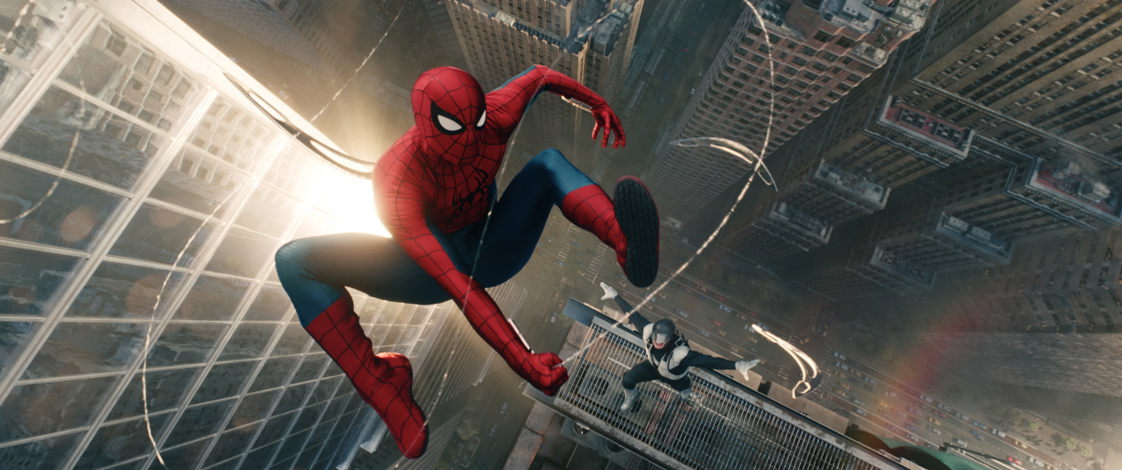
Spider-Man: A Brand New Day
In the five years since the last Spider-Man entry in the Marvel Cinematic Universe, a lot has happened. Marvel’s former cultural and financial power, which once drew crowds to cinemas regardless of which hero it put on screen, has faded. The complexity of the multiverse has become increasingly confusing for audiences. The actors themselves have moved on to other projects, more established and with greater cultural recognition (among them, The Odyssey, released at almost the same time). And yet, within the first few minutes of the film, it feels as though some of that special magic is back.
In this fourth film featuring Tom Holland’s version of Spider-Man, Peter Parker is dealing with the consequences of the ending of the massive No Way Home, from 2021. After a spell erases his existence from everyone’s memories, including those of his closest friends, MJ and Ned, and his former Avengers allies, Peter finds himself truly alone.
This serves as a catalyst for a more mature version of Tom Holland’s character, who, for the first time, has to completely fend for himself without relying on Avengers technology. This gives the character a more organic feel, reminiscent of Tobey Maguire’s first Spider-Man films, which captivated audiences 25 years ago. Tom Holland gives a more physical performance, grounded in Spider-Man’s urban identity and in New York City, without the complexities of the Marvel multiverse that have continued to escalate in recent years.
More than simply maturing, Peter finally seems to discover what it means to be Spider-Man without relying on a structure larger than himself. This is precisely where the film seems to find a new identity for this version of the character. After three films that became progressively more intertwined with the wider Marvel universe (from Tony Stark to the Avengers, through the multiverse), A Brand New Day feels almost like a return to the roots: less MCU, more Spider-Man.
The film also explores heavier emotional themes, following Peter Parker’s declining mental health as he struggles with his loneliness and with the difficulty of accepting that his former friends have built a life in which he does not exist. His loneliness is particularly painful because it does not result from rejection, but from his own sacrifice: heroism as a personal loss, the great responsibility that comes with a hero’s great power.
This becomes particularly evident in his reunion with MJ, played by Zendaya, one of the film’s most emotional moments. The contrast between Peter’s desire and emotions and the indifference of the woman he loves, whose memories of their relationship have been erased, is particularly raw. Their relationship thus becomes one of the main expressions of Peter’s new life: he has to learn to exist in a world where the person he loves most no longer knows who he is.
Sadie Sink also gives a strong performance as Jean Grey, a character from the X-Men universe, in a connection presumably explained by Marvel’s multiverse. Initially presented as the film’s antagonist because of the destruction she causes and her opposition to the hero, the revelation of her motivations in the final act gives her a more tragic dimension. The persecution of difference (of mutants within the film, and, in a somewhat political extrapolation to our current context, of those who are different from us) gives the film a somewhat suggestive tone, illustrating how fear of difference continues to be used as a political tool.
Overall, A Brand New Day is a competent film. Tom Holland gives a strong performance in a role we already know, but adds a new emotional depth that was missing from this incarnation of the character, following the monumental scene in No Way Home in which he cries over Aunt May’s death. It is precisely this dimension of loss that makes this new version of Peter Parker more interesting: for the first time, the character seems to truly carry the weight of being Spider-Man.
The connection to the wider universe is still visible, with the presence of the new Black Widow and the appearance of the Punisher, who adds little to the film beyond providing Peter Parker with a new figure who is somewhere between a paternal presence and a buddy-comedy partner. The integration of the X-Men is also interesting, as is the question of how they will be explored in the next Avengers chapter, set to be released this December.
Ultimately, the biggest challenge that A Brand New Day leaves for the future is not making Spider-Man relevant again (if there is one superhero capable of bringing the masses back to the cinema, it is he), but figuring out what to do with Peter Parker’s new life. After finally freeing him from the structures that defined his first trilogy, Marvel will now have to prove that it can allow him to evolve without constantly returning to the same themes: the multiverse, the Avengers, and nostalgia for previous versions. The real question for the next chapter of the character’s arc is therefore a simple one: what can Spider-Man do now that, finally, he has a life of his own?