L'aventura
The tender beauty of a summer holiday lies in the fleeting nature of its simplest moments. Sandy beaches warmed by the sun, sandwiches eaten at seaside cafés, landscapes drifting past the car window. Laughter, arguments, idle conversations. They all blend together into a palette of pastel colours, forever tinted by the warmth and brightness of summer.
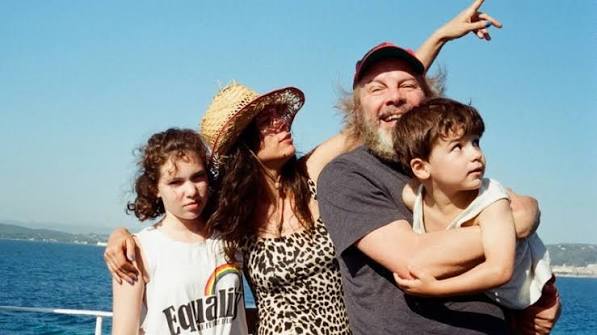
Sophie Letourneur’s L’aventura sets out to capture exactly that feeling. Premiering in Cannes’ ACID section, the festival’s parallel showcase dedicated to independent cinema, the film follows ten-year-old Claudine and her family on a road trip across Sardinia, moving from one beach, restaurant, and small town to the next, while the island’s idyllic landscapes become as much a part of the journey as the family itself.
Told through a slice-of-life approach, L’aventura lingers on seemingly insignificant moments that quietly reveal the family’s dynamics. The frustrations of travelling together slowly come to the surface. Three-year-old Raoul predictably throws tantrums wherever they go (serving as a rather effective anti-natalist advertisement, depending on your patience), his parents grow increasingly exhausted by the endless logistics of travelling with young children and the inevitable disappointments of plans gone wrong, while Claudine quietly resents how her younger brother’s every demand is indulged, leaving her feeling overlooked.
The film creates an unusual sense of intimacy by alternating between the events themselves and scenes of the family attempting to recount those same moments into a phone’s voice recorder. It’s a compelling formal idea, inviting us into the fragile process of preserving memory. Yet the execution proves uneven. The fractured chronology interrupts the otherwise simple progression of the journey, and rather than deepening the wistful nostalgia Letourneur seeks, the constant revisiting of events gradually drains them of their emotional immediacy. In trying so hard to preserve these memories, L’aventura ends up reliving them once too often.
Slice-of-life storytelling inevitably comes with certain narrative limitations. By focusing on ordinary moments, it often sacrifices dramatic momentum, and L’aventura is no exception. There is little dramatic force pulling the journey forward, no larger emotional destination beyond simply accompanying this family through the mundanity of their holiday. As a result, the film occasionally loses its grip, particularly as many of its conflicts revolve around the repetitive tantrums of its youngest character.
Still, the film’s sun-drenched atmosphere casts a warm glow over the entire experience. Despite its occasionally confusing structure and an overstretched running time that hardly justifies its 107 minutes, L’aventura possesses a nostalgic tenderness that makes this collage of memories quietly affecting. After all, the sun doesn’t only fade photographs into a blur; with too much exposure, it also washes their colours away entirely.