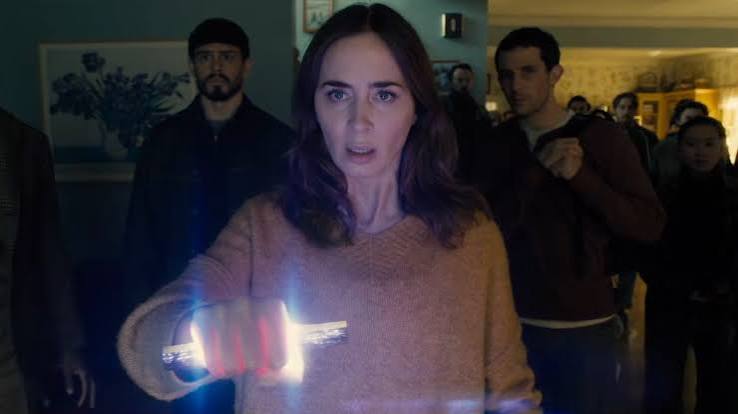
Disclosure Day
In an age where we’re bombarded with new releases, ranging from intimate indie dramas and sentimental character studies to endless superhero franchises and legacy sequels, the idea of the true blockbuster has become strangely diluted. As monoculture fades, so too does the sense of occasion that once surrounded films capable of captivating everyone at once. A true blockbuster demands more than spectacle; it requires ambition, originality, craftsmanship and, most importantly, an infectious sense of wonder. Few filmmakers have ever understood that better than Steven Spielberg.
A name that hardly requires an introduction, Spielberg remains one of the last great titans of classical Hollywood filmmaking. From Jaws, the film that practically invented the modern summer blockbuster, to the definitive Indiana Jones movie Raiders of the Lost Ark, E.T., The Color Purple, Jurassic Park, Schindler’s List and, more recently, the deeply personal The Fabelmans, his career has balanced entertainment with genuine artistic ambition. More than simply one of cinema’s greatest directors, Spielberg has always made films driven by an unwavering belief in the emotional power of storytelling.
Disclosure Day belongs firmly within that tradition. A science-fiction thriller built around the conflict between institutional secrecy and humanity’s right to know the truth, it explores the tension between authoritarian control and ordinary people trying to make sense of the extraordinary. In lesser hands, its faith in humanity could easily feel naïve or overly sentimental. Spielberg, however, approaches the material with such sincerity that the film never feels preachy, without ever becoming morally condescending. Above all, his optimism isn’t presented as wishful thinking but as a moral conviction.
The cast does a great job of conveying this. Emily Blunt delivers the film’s strongest performance, capturing both the fear and quiet determination of a woman forced to confront abilities she barely understands while navigating her own emotional burdens. Josh O’Connor continues the remarkable ascent that has defined the past few years, while Colman Domingo, Colin Firth and Eve Hewson give compelling supporting performances. Funnily enough, one of the film’s most memorable performances arrives only in its closing minutes: a brief appearance that captures, with remarkable authenticity, the raw emotional shock of witnessing something fundamentally beyond human comprehension.
Few directors have returned to extraterrestrial life as often, or honestly as successfully, as Spielberg. While the aliens here aren’t especially groundbreaking from a visual standpoint, they function less as mysterious invaders than as innocent beings caught in circumstances they cannot fully understand, at the mercy of humanity’s intentions. They become a vehicle for Spielberg’s reflections on human nature.
If there’s one notable weakness, it’s that Spielberg the director continues to outshine Spielberg the screenwriter. The film’s middle section loses some of the momentum established by its stronger opening and emotionally satisfying ending. Yet even when the screenplay falters, Spielberg’s command of the screen remains undeniable. Few filmmakers can hold an audience so effortlessly through technique alone.
Calling Disclosure Day one of Spielberg’s greatest films would be an exaggeration. But watching such an iconic filmmaker continue to work on this scale at the ripe age of 79 is definitely inspiring. At a time when conversations around artificial intelligence increasingly revolve around replacing artists, Spielberg reminds us what cannot be replicated: decades of craft guided by genuine curiosity, optimism and ultimately an enduring love of cinema. Even when Disclosure Day falls short of his very best, it’s difficult not to admire the passion behind it. And perhaps that’s the film’s greatest achievement: it reminds us that optimism, in the right hands, can still feel genuinely magical.