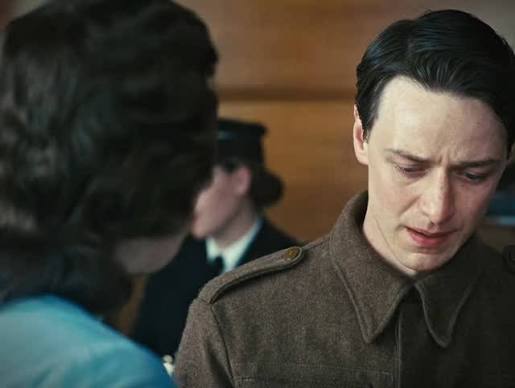
Authorial Power and Moral Redemption in Ian McEwan's Atonement
When the traditional theological framework of absolution is entirely dismantled, how can a wrongdoer achieve genuine moral repair within a subjective courtroom in which the self functions simultaneously as accused, executioner, and judge?
The Cambridge Dictionary defines atonement as “something that you do to show that you are sorry for something bad that you did”. As shown in the Stanford Encyclopedia of Philosophy, atonement may also refer to the “reconciliation or restoration of friendly relations between God and sinners”, “the propitiation of an offended or injured person, by reparation of wrong or injury”, “the condition of being at one with others”, or “the action of setting at one, or condition of being set at one, after discord or strife”. It’s important to keep in mind that an attempt at reconciliation doesn’t automatically guarantee genuine absolution.
According to Thurow (2023a), atonement can occur in different degrees: “you fully atone if you erase the rift, and you partially atone if you reduce the rift to various degrees. And one could atone for one wrong, while not atoning for another wrong against the same victim”. Understanding the term “atonement” is essential to a deeper reading of the book Atonement. If this were not the case, the concept wouldn’t be significant enough to serve as the novel’s title.
This is why it’s necessary to examine the critical distinction between expiation and atonement. Expiation expresses inner regret and may relieve personal shame, whereas true atonement requires an active attempt to repair the damage between the offender and the injured party. (Santos (2022))
This essay will examine the transition from childhood cognitive immaturity and narrative unreliability into adult psychological penance, tracing how the protagonist’s clinical labour functions as passive expiation rather than active historical restoration. In addition, it will assess the ethical function of Briony Tallis’s self-imposed textual condemnation, demonstrating how her manufactured happy ending exposes the systemic impossibility of a creator constructing her own moral redemption.
This paper will not, however, extend its scope to an analysis of the sociological macro-structures of the mid-century British class system, nor will it provide a comparative analysis of Ian McEwan’s wider literary bibliography. Instead, it will focus on the singular metafictional mechanics of this text.
Childhood, cognition and narrative unreliability
Viewed through a psychoanalytic lens, thirteen-year-old Briony Tallis’s early behaviour, just like any other teenager, is rooted in an adolescent psychological framework that lacks the cognitive maturity required to interpret complex adult relationships (Robins, 2011). To understand this more clearly, one may consider the work of the French psychoanalyst Jacques Lacan, who combined Sigmund Freud’s concepts with philosophy and linguistics in order to interpret the unconscious mind. Lacanian theory essentially argues that the unconscious is structured like a language and divides human experience into three distinct dimensions: the Real, the Imaginary, and the Symbolic. Jones (2023)
When Briony’s mental state in Atonement (Qouzloo and Sadjadi, 2021) is examined through this framework, she appears to be trapped within this Imaginary order. Jones (2023) suggests that she repeatedly retreats into the Imaginary because it offers her a comforting, although entirely false, illusion of control over her surroundings. This fixation seems to trick her into believing that she can dictate and orchestrate the lives of real people around her simply by transforming them into characters in her stories.
At the core of her motivation, there appears to be a deep sense of “lack” and a strained relationship with the “Other” (Jones (2023)). Throughout the opening chapters, Briony comes across as a girl desperately seeking attention and validation, particularly from her mother, Emily Tallis. However, because Emily remains emotionally detached and responds to her daughter’s creative projects with indifference, Briony is left with a significant psychological void (Jones). In an attempt to compensate for this unmet need, she redirects her focus onto her visiting cousins, imposing strict rules and regulations on them in order to govern their behaviour, as can be seen in the first part of Atonement.
This psychological distortion shows how a profound lack of attention and stable guidance within the primary family structure can seriously destabilise a child’s moral discernment and sense of accountability (Santos, 2022, p. 5).
All of this naturally raises a difficult question: can a thirteen-year-old bear legal and moral responsibility for her actions? This question forces the reader to consider whether Briony’s “crime” is genuinely culpable, given her young age. After all, the early teenage years are widely recognised as a particularly difficult stage of life, marked by an overwhelming collision between a newly intense inner world and the confusing pressures of external reality (Robins, 2011).
The most volatile element of this developmental stage is the intersection between newly emerging abstract thought and a serious lack of real-world perspective. The adolescent brain begins to experiment with hypothetical scenarios and complex ideas, yet it still lacks the maturity to assess them with true discrimination. A thirteen-year-old may easily fall in love with an idea and accept it on the weakest evidence, as Briony does in relation to Robbie and Lola’s situation. Adolescents can show a dangerous tendency to mistake a half-truth for the whole truth, building dogmatic convictions that allow for no contradiction. Once an imaginative narrative takes root, their literal interpretation can turn it into an undeniable reality (Smith, 2013; Robins, 2011). Sernham (2009) argues that Briony didn’t have “much of a choice other than living in her head” because of her parents’ physical and emotional absence. She creates an imaginary world without anyone around her realising that she is doing so.
When the police ask Briony whether she really saw Robbie in the darkness with Lola, she says: “I know it was him./ Let’s forget what you know. You’re saying you saw him./ Yes, I saw him” (McEwan, 2002: 134). He & Zhong (2025: 5) interpret this interaction as evidence of uncertainty in Briony’s unconscious mind. According to their paper, “In Briony’s world, she always thinks she is more mature than her peers”; however, through her false accusation, one can see that she ultimately reveals immaturity and poor judgement.
These arguments suggest that Briony’s accusation is not the result of motiveless malice, but rather the structural product of an isolated childhood, an adolescent attachment to Robbie, and an unacknowledged jealousy of Cecilia. During the first part of Atonement (McEwan, 2002:18-27), one can see how attached Briony is to Robbie and how jealous she is of her sister, Cecilia. As He and Zhong state, “After Briony has experienced numerous fantasies and transformations, her own ego power grew, a power that encompasses jealousy of her sister, Cecilia, as well as complex emotions towards Robbie”.
It is also important to remember that Briony is an unreliable character, perhaps because of her “youth, naivety and simple-mindedness” (Abdullah & Wan Yahya 2015:7). Briony’s misconception of certain events, as in the moment when she thinks that “at his [Robbie’s] insistence she was removing her clothes, and at such speed . . .
What strange power
did he have over her?
Blackmail?
Threats?”
(McEwan, 2002: 36) confirms what many studies suggest: she is a highly unreliable narrator who repeatedly reshapes the story whenever it suits her. Unreliable narrators often reveal their lack of credibility through contradictions, hesitations, or later admissions of mental instability. Because their interpretations and perceptions frequently diverge from the actual truth of the story, it becomes the responsibility of an alert reader to scrutinise the text, reassess the narrator’s claims, and independently recognise their unreliability. Although Abdullah and Wan Yahya (2015) argue that Briony’s attitude may be connected to jealousy of her sister, it may be more accurate to view that attitude as the result of a fusion of all these different elements.
In order to understand why Briony falsely accuses Robbie and stubbornly maintains her version of events despite her own doubts, Salman (2023) turns to the concept of moral stupidity. As Salman explains, “[m]oral failure is considered to be a lack in cognitive thinking, and thus stupidity leads to immoral and wicked behaviour and irresponsibility” (2023:3). In essence, Briony’s actions arise from her inability to process the complicated adult situations unfolding around her. Faced with experiences she does not understand, she falls back on her imagination because “[a]rt, she believes, will act as a corrective to the untidiness of life” (O’Hara 2011, 76). Put simply, whenever reality becomes too messy or confusing for Briony to manage, she relies on fiction to create a convenient explanation.
Although it’s difficult to reach a definitive conclusion on whether a thirteen-year-old should bear the full weight of responsibility for her actions, there’s no denying the absolute devastation that Briony’s mistake brings upon the lives of Robbie Turner and her sister Cecilia. Robbie, an exceptionally bright student with a promising future, is stripped entirely of his ambition to study medicine and marry the woman he loves. Instead of building that life, he is sent to prison, later forced into war, and ultimately dies on the beaches during the Dunkirk evacuation. Meanwhile, Cecilia cuts all ties with a family she feels has deeply betrayed her; she loses the love of her life and is tragically killed during a 1940 London bombing raid (Thurow, 2023b).
Wartime penance: expiation rather than reparation
During the second part of Atonement, Briony appears to begin feeling guilt, remorse, and sorrow for what she has done. When she rejects university and the path expected by her family, even Cecilia gains the impression that “she’s taken on nursing as a sort of penance” (McEwan 2002:155). Giving up her former life can be read as a conscious effort to dismantle the arrogant, privileged identity that contributed to her terrible mistake. She trades her writing aspirations for strict submission, her academic ambitions for the labour of emptying bedpans, and her own name for a simple nurse’s badge. (Santos (2023)) This severe personal sacrifice may be seen as her first real and tangible act of penance for the past. (Santos (2022), He & Zhong (2025))
However demanding her hospital duties may be, her work functions primarily as a form of self-inflicted punishment aimed at her own guilt rather than as a means of repairing the shattered lives of Robbie and Cecilia. The concepts of expiation and atonement, as mentioned in the introduction, are therefore crucial to the analysis of this section of the novel. By caring for injured soldiers in the wards, Briony performs a symbolic substitution rather than making direct, real-world amends. As a result, her exhausting medical work reduces her own emotional pain but does nothing to reverse the concrete harm she has caused her victims. (Santos (2022)).
The clear distinction between soothing one’s own conscience and actually correcting a moral wrong is widely recognised in modern literary and philosophical studies. Based on the core principles of moral repair defined by Thurow (2023a), true atonement only occurs when a person successfully “erases the rift” created by their wrongdoing. If an act is merely symbolic and fails to help the people who were wronged directly, it only reduces the tension to a limited degree, leaving the original damage largely intact (Thurow, 2023a). For Briony, comforting a fatally wounded French soldier may be read as a deeply sad illustration of the gap between symbolic care and actual reparation. Referring to this specific hospital interaction, Sequeira (2016: 8) builds on Cavalié’s (2009) analysis and notes that “Briony symbolically tries to redress her wrongs. While it is not Robbie she takes care of. . . she now accepts the chaos inherent to life.” Although this mental growth shows that she is maturing, it also reveals that her self-punishment takes place in isolation, entirely cut off from the people whose lives she actually destroyed.
Ultimately, this sharp contrast between inner torment and real-world amends proves that Briony’s wartime service falls short of the requirements for complete forgiveness. Working herself to exhaustion satisfies her personal desire to be punished, but it doesn’t alter the harsh reality of Robbie and Cecilia’s exile and suffering. In relation to this exact disparity, Santos (2022: 7) reaches a clear conclusion that aligns with this perspective, arguing that “Briony has failed in the act of reparation, but certainly succeeded in the process of expiation.” Therefore, even though she develops from a conceited young girl into a caring nurse, this transformation remains an internal exercise in penance rather than a concrete solution to the crime she committed.
The impossibility of real-world reconciliation
In the novel’s actual reality, Briony never confronts Robbie or Cecilia. Instead, Robbie dies from septicaemia at Dunkirk, and Cecilia is killed in the Balham bombing. Since both die in 1940, any possibility of real-world reconciliation is permanently cut off (McEwan 2002:271). Regardless of the redemptive stories Briony later creates, the only people with the authority to forgive her are gone. Her confession emerges only when accountability has become impossible, turning her work into a “unilateral exercise in self-consolation” rather than a form of genuine ethical repair.
Many scholars highlight the “unbridgeable gap” between fact and fiction at this point. Abdullah and Wan Yahya (2015) suggest that, since the lovers died separately, Briony’s fictional reunion is essentially a “desperate attempt” at atonement. She remains isolated because they died long before she even began her manuscript. Furthermore, Walker (2025: 126-127) notes that Briony never initiates a real-world dialogue with them, meaning that she can never know whether they would actually have forgiven her. As Worthington (2013, ch. 8) points out, she can’t “write” the forgiveness she desires because it’s already too late when she decides to act. This also leaves victims such as Robbie’s mother, who dies before his release, without any justice (Walker 2025: 127). In the end, these deaths appear to turn her happy ending into a “defensive literary illusion.”
The manufactured ending and the denial of grace
It’s important to remember that the reconciliation scene Briony idealises isn’t a record of actual events, but a constructed episode within her manuscript. The way this fabricated moment reshapes the novel and its meaning is highly controversial. Bolton (2010:3) argues that the ending of the book “radically reconfigur[es] the ontological status of the entire storyworld generated in the first three sections of the novel”. He and Zhong (2025: 7), however, argue that Briony gives the novel a happy ending “which is a reflection of her quest for superego values and her unconscious behaviour”. Ultimately, Briony herself admits: “I like to think that it isn’t weakness or evasion, but a final act of kindness, a stand against oblivion and despair, to let my lovers live and to unite them at the end. I gave them happiness, but I was not so self-serving as to let them forgive me.” (McEwan 2002:272).
In her manuscript, the harsh and unforgiving version of Robbie whom Briony confronts should not necessarily be read as a reflection of the real character, but rather as a manifestation of her own intense self-reproach. Briony may be using this imagined encounter to inflict upon herself the exact condemnation she believes she deserves for her childhood crime. Because the real lovers are dead, the entire scene can be understood as taking place within her own mind, functioning as an exercise in psychological self-punishment. As Santos (2022, p. 4) observes, “the person who is acting in such a rude way towards Briony is not Robbie himself, but Briony’s projection of Robbie. In fact, all characters are projections of Briony”.
Since every figure in the narrative is created by Briony, Robbie’s hostility may be understood as literally authored by the guilty party against herself. She possesses the absolute narrative power to write a scene in which the lovers grant her absolution, yet she deliberately withholds the forgiveness she so desperately craves. This authorial choice simultaneously proves her sincere remorse and acknowledges that no genuine external absolution can ever be achieved. Sequeira (2016, pp. 7-8) highlights this dynamic by pointing to the manuscript’s internal logic, noting that Robbie’s hatred “was not reasonable or just … but it helped” (McEwan, 2002, pp. 228-229). As Sequeira emphasises, she “gave them happiness, but I was not so self-serving as to let them forgive me” (McEwan, 2002, p. 372).
By intentionally constructing a resentful Robbie, Briony ensures that her attempt at atonement does not collapse into a convenient or painless fantasy. This structural denial of grace serves a crucial ethical function, preventing her from slipping into moral complacency. Lippitt (2019) interprets this deliberately withheld forgiveness as a form of “continued self-reproach”, identifying it as the necessary mechanism through which Briony manages her enduring guilt. Through this painful, but necessary, self-condemnation, she moves towards a responsible form of self-forgiveness that recognises the seriousness of her past actions without abandoning accountability.
Authorial power and the structural barrier to redemption
The most fundamental barrier to Briony’s redemption is, as previously shown, built into the very structure of her project: as the creator of her fictional world, she dictates all its conditions, leaving no independent figure who can truly grant the forgiveness she seeks (Worthington (2013)). Because she has complete control over her narrative, she effectively operates as a supreme being within its boundaries. As Weston (2019) observes, the protagonist herself recognises this paradox, which becomes visible when she asks “how can a novelist achieve atonement when, with her absolute power of deciding outcomes, she is also God?” (McEwan, 2002). She has manufactured “the limits and the terms” of her own reality, meaning that true absolution is impossible because there is no external entity left to appeal to (Worthington 2013).
Genuine atonement inherently depends on the presence of an autonomous outside party, but the act of writing undermines this dynamic by drawing every external viewpoint into the author’s own mind. By turning the people she wronged into characters, Briony traps herself in a loop in which she is the one pulling the strings. Worthington (2013) argues that such confessional writing is inevitably an act of “authoritative appropriation”, making the idea of writing one’s own forgiveness structurally impossible. Furthermore, the individuals whose forgiveness she needs have been completely absorbed into her own authorial voice, and she cannot escape that isolation. Therefore, Briony tries, as far as possible, to secure closure for herself and for the reader.
Ethical repair may be understood as something that requires moving beyond mere coexistence and assuming a profound responsibility towards the wronged party, a standard that absolute narrative control simply cannot meet. When an author dominates the narrative, she eliminates the independent voice of the victim, effectively committing what Emmanuel Levinas describes as a “murderous” act of “appropriation” (Levinas, cited in Worthington 2013). To atone genuinely, a person must surrender power and allow their own narrative to be challenged by the “presence of the Other” (Levinas, cited in Worthington 2013). Since Briony retains total control over the conclusion of her story, she cannot fully prioritise the autonomy of her victims. This proves that the very authorial power she uses to construct her happy ending may also be what prevents her from achieving real moral redemption.
Furthermore, He and Zhong (2025: 8) argue that “To atone for her sins, Briony brought the truth to light, but she also knew that the truth in the novel is not entirely true” and that “In [a] ‘superego’ sense of morality and justice, she did not need to care about the outside world, but only need[ed] to seek her own inner peace”. Weston (2019) reinforces this idea by stating that “Briony, fails to grapple ethically with historical memory, preferring consolation to the real historical record.”
Conclusion
Judging Briony’s manufactured happy ending requires a nuanced approach rather than a simple pass or fail verdict. Her success must be understood as graduated. While she completely fails to achieve any tangible, material reparation in the real world, she does undergo a profound internal reckoning through decades of suffering. Assessing this divided outcome, Santos (2022) observes that she “failed in the act of reparation, but certainly succeeded in the process of expiation”. This shows that her psychological penance is profound, even if her physical ability to repair the past is nonexistent.
This partial verdict is further supported when one considers the mechanics of atonement itself. Drawing on Thurow’s (2023a) framework, one can argue that Briony atones to a certain degree by closing the moral rift within herself, while the physical rift in the world remains entirely un-erased. Therefore, her famous declaration that she gave the lovers their happiness functions as a devastating irony. Within the pages of her manuscript, it is a genuine gift; outside the text, in the material reality of 1940, it is an empty gesture. This unresolved tension honours what the course materials describe as a refusal of “final solutions”, deliberately leaving the door open rather than neatly resolving the tragedy (Walker, 2025, p. 65).
Because external absolution is impossible, Briony is forced to confront her guilt internally, achieving only a highly qualified form of success. As Lippitt (2019) argues, she effectively models a state of “responsible self-forgiveness”. Crucially, this is not an easy or complacent forgiveness, but one that deliberately retains a heavy measure of continued self-reproach. For a secular creator trapped in a world where the victims are gone, this agonising and self-aware balance is arguably the highest ethical standard she could ever hope to reach.
These two realities, her lifelong penance and her failure to enact restitution, become, in a certain sense, the core tragedy of her situation. Her self-forgiveness and suffering are real, but because Robbie and Cecilia have died and the true culprits remain entirely unpunished, the fractured world is never made whole again. The manufactured joy at the end of her novel acts as a soothing balm for the author and as a tempting consolation for the reader, offering the happy ending that readers often prefer.
However, the sudden metafictional revelation in the coda deliberately destroys this comfort, preventing critical readings from settling into the illusion. Atonement, as a novel, fundamentally enacts the very failure its protagonist confesses. Instead of letting the audience off the hook, it pushes the critical view “beyond” simple relativist consolation, forcing an unavoidable and uncomfortable ethical reckoning with the massive traumas of history (Weston, 2019). The reader is denied the easy way out, mirroring the harsh reality that Briony herself cannot escape.
In the end, the comforting fiction she creates cannot alter the material facts of the past. Her lifelong project is deeply flawed. As He and Zhong (2025, pp. 30-32) suggest, “her atonement is not a complete success, perhaps a continuation of mistakes”. Yet, faced with the absolute impossibility of true repair, the very act of trying becomes her only remaining option. She cannot undo the deaths or rewrite actual history, meaning that, in the truest sense, “[t]he attempt was all” (He and Zhong, 2025).